

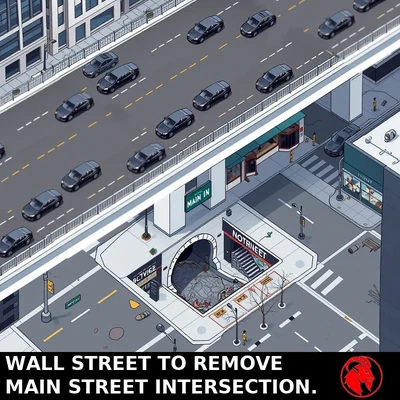
New York, NY — A coalition of Wall Street business associations announced Thursday a long-anticipated plan to remove the intersection at Wall and Main Streets, citing urban decay, a vector for communicable disease, and what one spokesperson described as "an unacceptable rate of limousine damage from pedestrian contact." Project documents note that pedestrian strikes have caused significant damage to luxury cars in the area.
"That intersection has always been dangerous," said Harrison Pryce, a managing director at Aldgate Meridian Capital and chair of the Wall Street Infrastructure Improvement Consortium. "Our vehicles are getting dented from nobodies that are almost jumping in front of them. Luxury vehicles. High-end vehicles. Vehicles that represent significant capital investment. This cannot continue."
The Planning Process
Pryce said the removal had been under study since the early 1980s, though he acknowledged the proposal had "taken various forms" over the years. Earlier versions included a pedestrian aqueduct, a one-way and downhill Main Street, and a proposal described in a 1994 internal memo as "a Main Street that is technically still there but just a road to nowhere."
The current proposal would reroute Main Street traffic through the underground municipal sewer system, which Pryce described as "an underutilized corridor with significant capacity." He said the route was "fully accessible" and that signage would be provided. Asked whether pedestrians were expected to walk through an active sewer, Pryce said the consortium preferred the term "subsurface throughway" and that conditions had "improved considerably since the original construction in 1805."
"Main Street can wade through the underground sewer. Wall Street gets an express overpass far removed from the filth. Everyone is happy," he said. "Everyone that matters is happy."
The Pedestrian Problem
Pedestrian traffic at the intersection has increased substantially in recent decades. Pryce attributed this to a failure of planning.
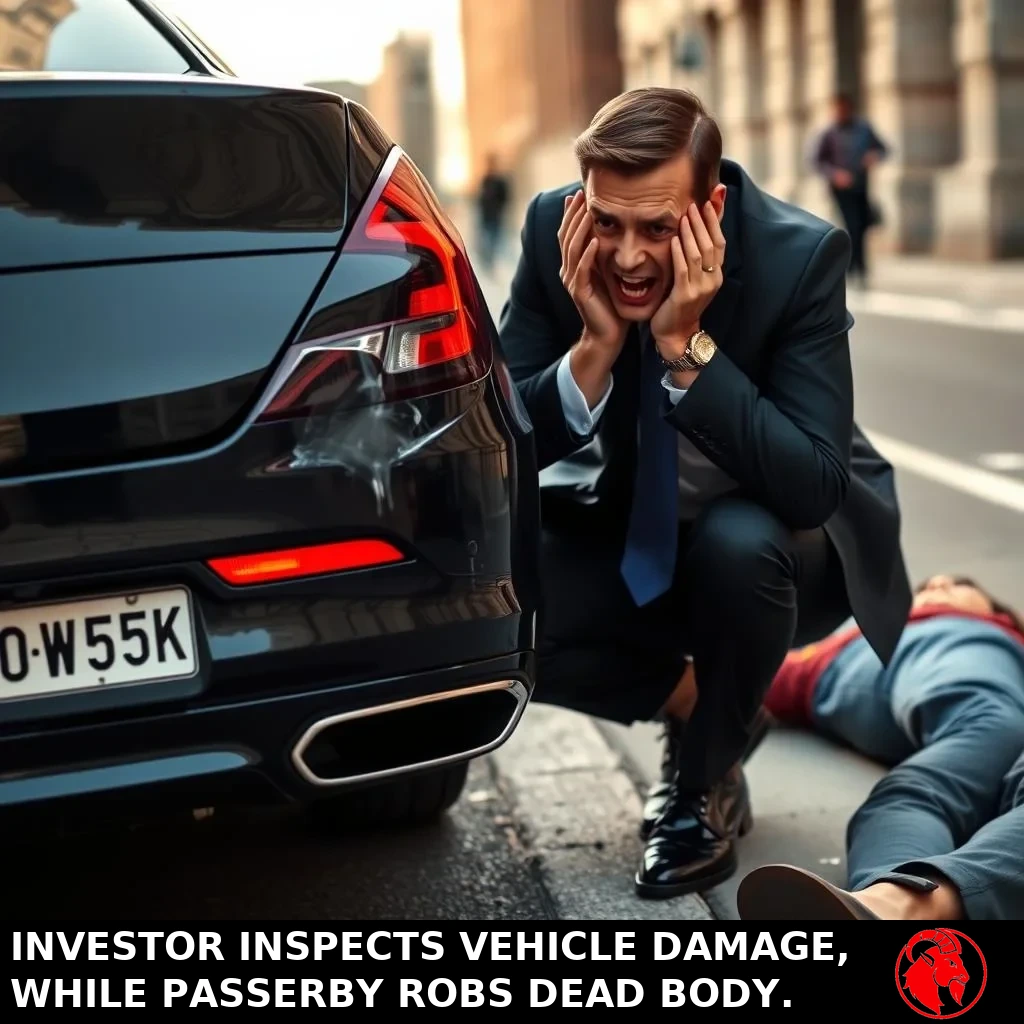
"Main Street is sending more and more pedestrians every day. Most of them are providing us drugs and prostitutes. But we just don't have the capacity anymore," he said.
Asked whether pedestrians might also be injured by the oversized limousines, Pryce said the consortium's study had focused on vehicle damage, which was "the quantifiable harm." He lamented that every person run over incurred an additional bribe to police to "look the other way."
A city transportation official, speaking on background, said the intersection had been the site of 34 pedestrian injuries in the past three weeks. Pryce, informed of this figure, said 34 was "not a number that moves the needle at our level." He elaborated: "There are literally tens of millions of destitute Americans, so no one cares about a few dozen every week. We need to focus on the rare and expensive automobiles that are being scuffed from impact."
When asked if Main Street pedestrians might someday share Wall Street, Pryce reminisced for a moment. "My father used to say, you're either on the wealth highway, or you are roadkill. I won my Princeton fraternity leadership with that slogan."
Divine Inspiration
Pressed further, Pryce eventually arrived at the theological floor. "Some of us were chosen," he said. "I am not embarrassed to say it. The market is not a coincidence. The market is providential. The same hand that ordered the stars ordered the sorting. We are at the top because we were placed at the top. The dominant species sits where it does for a reason. The reason is divine." He clarified, briefly, that he was not speaking on behalf of Aldgate Meridian Capital, although they largely shared his view.
Dr. Lila Anseth, who studies class psychology at a research institute that depends almost entirely on donations from people in Pryce's general bracket, said this framing was the predictable terminus. "Meritocracy fails on inspection, so it gets escalated to divine right," she said. "Once the wealthy describe themselves as the dominant species chosen by God, you have reached the floor of the belief system. There is no deeper layer. Anyone questioning the wealth structure is now questioning God. Every entrenched aristocracy has used this narrative. The Pharaohs used it. The Bourbons used it. And their motor vehicles were not nearly as nice."
Anseth described what she called the "wealth paradox": the simultaneous belief that one is meritocratically superior to those without money and the conviction that those without money pose a physical, moral, or hygienic threat. "Both ideas are held at once," she said. "They reinforce each other. Fear authorizes distance. Distance confirms superiority. Superiority justifies the fear. There is no exit from the loop. We are not even trying to find one."
Anseth added that the project to remove the intersection was, "in the strictest clinical sense, a coping mechanism." Asked whether the coping mechanism would work, she said: "It will create distance between pedestrians and vehicles, as well as increase the distance between the oligarchs and the undesirables. It is a win-win scenario, if the rich people are both sides of that."
Main Street Response
No one asked them.
City Approval
The city approved the removal in a vote of 7 to 2. The two dissenting council members are still quite poor. The others have suddenly purchased luxury homes and boats. No one can trace their sudden financial boons.
Mayor Douglas Harn said the project would "modernize a critical corridor" and make the city "more competitive." He said the decision was data-driven, and his new beach house in the Florida Keys proves that.
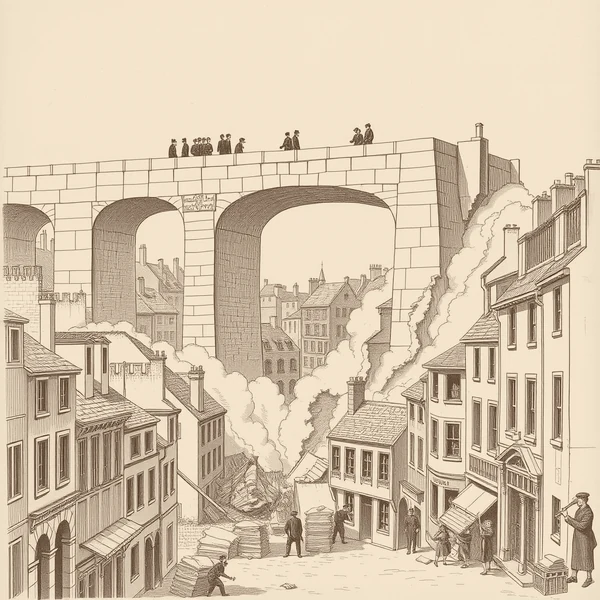
Satyr Satire arranged an interview with Aldgate Meridian Capital, but got lost in the sewer on the way there.